Joint Replacement · Los Angeles, CA
Hip, knee and shoulder replacement with Dr. Joe Cooper
Joint pain that wakes you at night, stiffness that makes stairs a decision, a shoulder that no longer reaches the top shelf. When the cartilage in a joint wears out, movement stops being automatic. Dr. Joe Cooper performs total hip, knee and shoulder replacement in Los Angeles to relieve that pain and give you back the motion you have lost.

What joint replacement involves
Worn cartilage replaced with a
smooth, working joint
A joint works because a layer of cartilage lets two bones glide against each other. Arthritis and old injuries wear that layer down until bone rubs on bone. That is where the pain, the grinding and the loss of motion come from. In a joint replacement, Dr. Cooper removes the damaged surfaces and fits implant components that restore the gliding surface. For a hip, that means a new ball and socket. For a knee, resurfaced ends of the thigh bone and shin bone. For a shoulder, a new ball and a smooth socket. Most patients are up and walking with help the same day or the next, and pain relief usually improves steadily over the first several weeks. Surgery is not the first step for everyone. If injections, activity changes or physical therapy can still carry you, Dr. Cooper will tell you that directly. If you are a candidate for sports repair instead — an ACL or meniscus tear — or for regenerative options such as PRP or stem cell treatment, those conversations happen in the same visit.
How care works here
From first visit to
back on your feet
Step 01
Consultation with Dr. Cooper
You describe what hurts, when it started and what you can no longer do. Dr. Cooper examines the joint, checks your range of motion and reviews any imaging you already have.
Step 02
Imaging and diagnosis
X-rays show how much cartilage is left and how the bones line up. If soft tissue is in question — a rotator cuff, a meniscus, a ligament — additional imaging is ordered before any decision is made.
Step 03
Reviewing your options
You hear every reasonable path: therapy, injections, PRP or stem cell treatment, arthroscopic repair, or joint replacement. Dr. Cooper explains what each one can and cannot do for your specific joint.
Step 04
Planning your surgery
If replacement is the right choice, your implant size and approach are planned in advance. Our office handles scheduling, surgical clearance and insurance verification so you know the cost picture before the date.
Step 05
Surgery day
Most hip, knee and shoulder replacements take one to two hours. Anesthesia and pain control are planned around you, and many patients begin moving the joint within hours of leaving the operating room.
Step 06
Recovery and follow-up
Physical therapy starts early and progresses week by week. Dr. Cooper sees you for scheduled follow-ups to check motion, strength and healing, and adjusts the plan as you improve.
About the practice
One surgeon, from consultation through
recovery
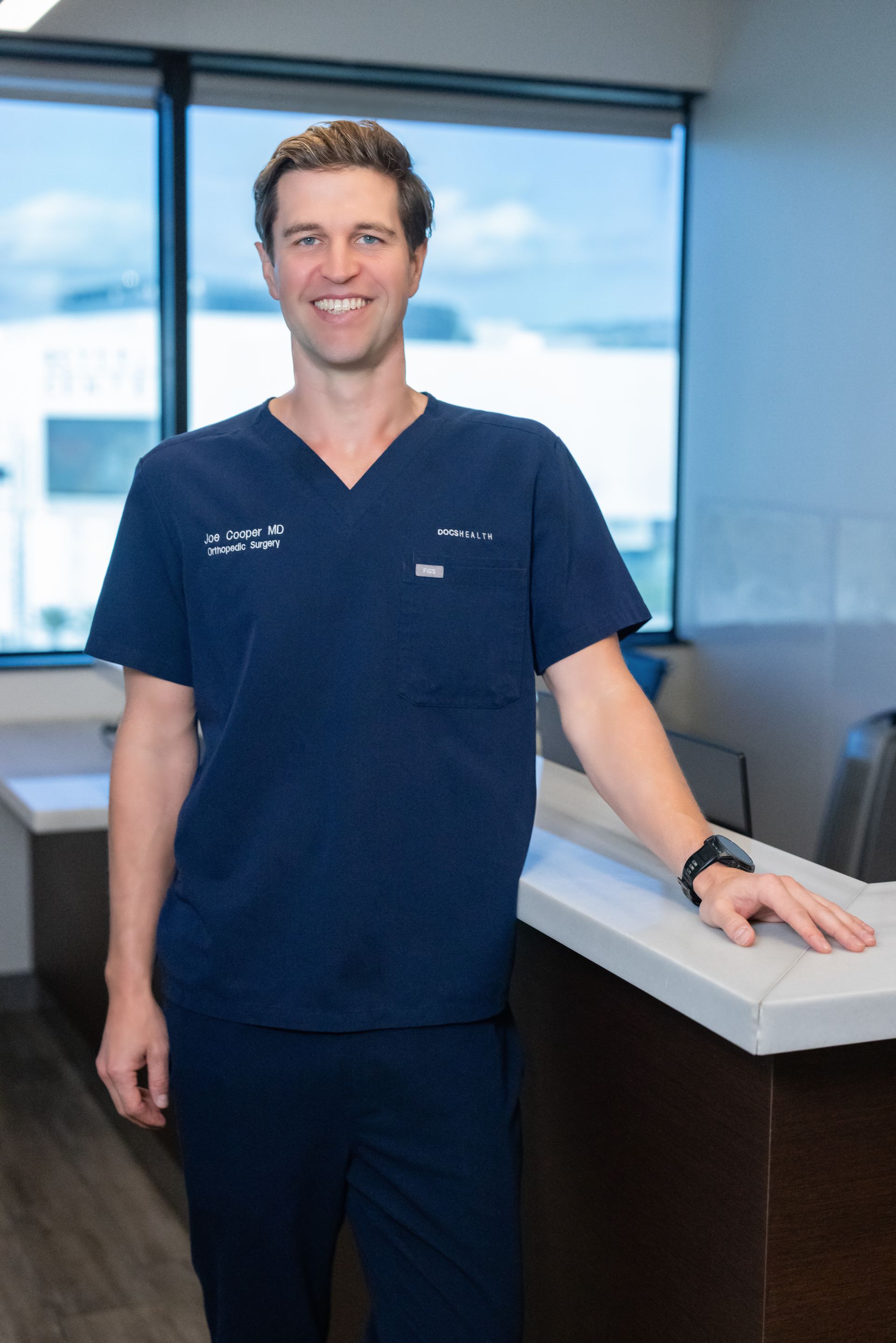
Joe Cooper MD is an orthopedic surgery practice on West 3rd Street in Los Angeles, focused on joint replacement of the hip, knee and shoulder, along with sports injury repair such as ACL and meniscus surgery. Dr. Cooper also offers regenerative treatments including PRP and stem cell injections for patients who are not ready for surgery or who want to try a joint-preserving option first. Care here is by appointment, Monday through Friday. That structure is deliberate — it keeps visits unhurried and means the surgeon who examines you is the surgeon who operates and the surgeon who checks your progress afterward. Patients come to us from across Los Angeles and the surrounding area, often after living with joint pain far longer than they needed to.
You see Dr. Cooper for your exam, your plan and your follow-ups.
Replacement, arthroscopic repair, PRP and stem cell treatment under one roof.
If surgery can wait, you will be told. If it cannot, you will know why.
How we practice
What you can expect from
your care
Surgery only when it helps
A worn joint on an X-ray does not automatically mean an operation. The decision comes from your pain, your function and what you want to get back to.
Plain explanations
You will hear what the implant is, where the incision goes, how long you will use a walker or a sling, and what the first two weeks actually feel like.
Motion first
Recovery is built around moving the new joint early and safely, with therapy coordinated to your specific procedure.
Common Questions
Common questions about joint replacement
The usual signs are pain that no longer responds to rest, medication or injections, stiffness that limits walking, dressing or reaching, and pain that interrupts sleep. X-rays help confirm how much cartilage is gone. Dr. Cooper weighs those findings against how much the joint is affecting your daily life before recommending surgery.
Most patients walk with assistance the day of or the day after hip and knee surgery, and shoulder patients begin gentle motion early in a sling. Daily activities generally return over the first six weeks, with strength and endurance continuing to build for several months. Your exact timeline depends on the joint, your starting condition and how consistently you attend therapy.
Cost depends on your insurance plan, the surgical facility and the specific procedure. Our office verifies your coverage and reviews your expected out-of-pocket amount with you before scheduling, so there are no surprises on the day of surgery. Call 424-800-3627 and we can start that check.
Sometimes. Physical therapy, activity changes, bracing and injections can manage moderate arthritis for years. For certain patients, PRP or stem cell treatment is worth trying first, and torn cartilage or ligaments — a meniscus or an ACL — may be repaired arthroscopically instead. Dr. Cooper will tell you which of these applies to your joint.
Still Have Questions?
We're Here to Help
Our team is happy to answer any questions you have about treatments, appointments, and what to expect.
Contact UsNo referral required
Los Angeles, CA
Talk to Dr. Cooper about your hip, knee or shoulder
Bring your questions and any imaging you already have. You will leave with a clear picture of what is happening in the joint and what your options are.