Total Shoulder Replacement
Shoulder pain that no longer settles down deserves a real answer
When arthritis or a worn rotator cuff has left your shoulder stiff, aching at night, and hard to lift, total shoulder replacement can relieve the pain and give you back usable motion. Dr. Joe Cooper performs total shoulder replacement in Los Angeles for patients who have tried injections, therapy, and time without lasting relief.
What the surgery involves
A worn joint surface,
replaced with a smooth one
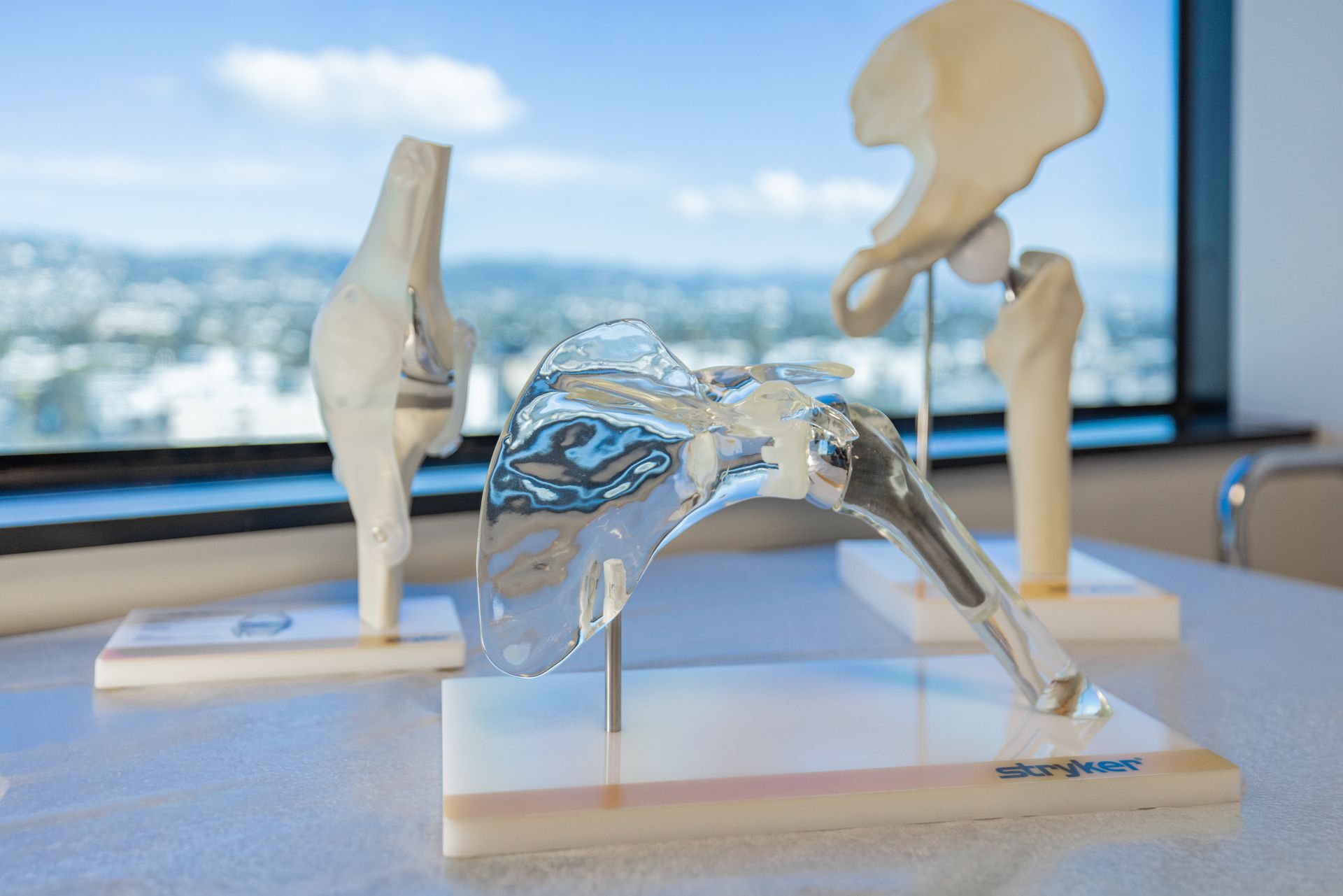
Your shoulder is a ball-and-socket joint. Over years, the cartilage that lets the ball glide inside the socket can wear away from arthritis, an old fracture, or a rotator cuff tear that has changed how the joint moves. Bone then rubs on bone, which is why the pain is often worse at night and why reaching overhead or behind your back becomes difficult.
In a total shoulder replacement, Dr. Cooper removes the damaged ball at the top of the arm bone and the worn surface of the socket, then replaces them with a metal stem and ball and a smooth plastic socket liner. If your rotator cuff is torn beyond repair, a reverse total shoulder may be used instead — the ball and socket positions are switched so the deltoid muscle can lift the arm in place of the cuff. Which option fits you is decided from your exam and imaging, not from a template.
Most total shoulder replacements take one to two hours. Many patients stay one night, and some go home the same day. You will wear a sling at first, and gentle motion usually starts within the first week or two.
Your care path
From first visit to
using your shoulder again
Step 01
Consultation and exam
Dr. Cooper listens to how the pain started, checks your range of motion and strength, and reviews what you have already tried. You will leave knowing whether surgery is on the table or whether other options should come first.
Step 02
Imaging and joint assessment
X-rays show how much cartilage and bone have worn down. A CT or MRI may be added to measure the socket and check the rotator cuff, which determines whether a standard or reverse replacement suits your shoulder.
Step 03
Surgical plan and pre-op clearance
You will see the implant plan for your shoulder and go over anesthesia, medications, and medical clearance. This is also when we review insurance coverage and out-of-pocket cost so there are no surprises.
Step 04
Day of surgery
The procedure is done under regional nerve block with sedation or general anesthesia. Dr. Cooper places the implant, confirms smooth motion in the operating room, and closes. You wake up with the arm supported in a sling.
Step 05
Early recovery at home
The nerve block covers the first day or so, then pain is managed with a plan built to limit opioid use. You will have clear instructions for sling wear, showering, sleeping position, and the gentle motion to begin right away.
Step 06
Therapy and return to activity
Physical therapy moves from passive motion to active motion, then to strengthening. Desk work often resumes in a few weeks; driving, golf, and swimming come later once strength and control return.
Why patients choose this practice
A surgeon-led practice
built around the joint
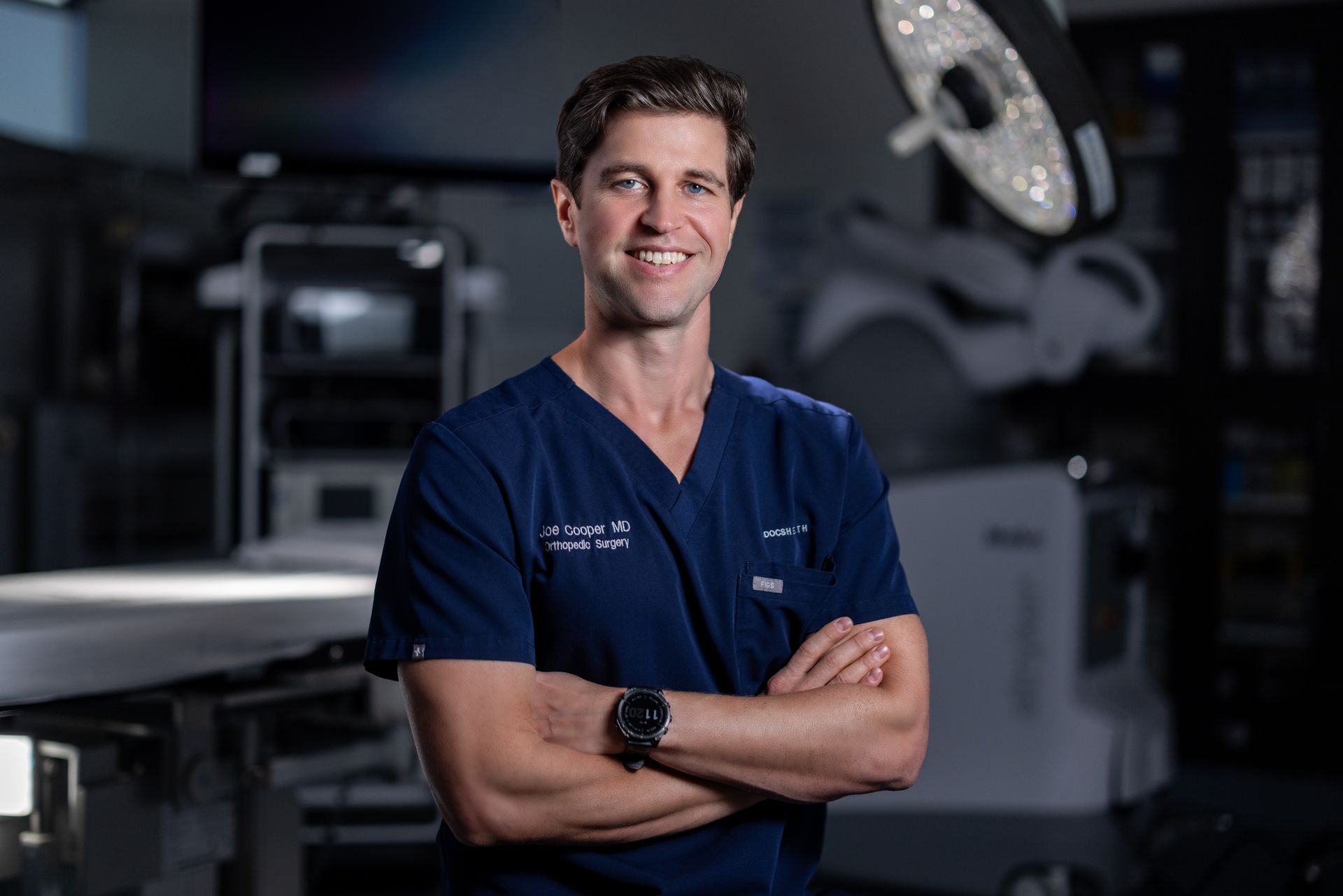
Dr. Joe Cooper's practice is focused on joint replacement of the hip, knee, and shoulder, along with sports injury repair and regenerative treatments such as PRP. That focus matters for shoulders, because the decision between a standard replacement, a reverse replacement, and non-surgical care depends on details that are easy to miss.
You see Dr. Cooper at your consultation, in the operating room, and at your follow-up visits. Our office on W 3rd St. serves patients from across Los Angeles, and appointments are scheduled Monday through Friday so your visits and follow-ups stay predictable.
The same surgeon who evaluates your shoulder performs the surgery and follows your recovery.
If injections, therapy, or PRP could still help your shoulder, we say so before recommending a replacement.
We review benefits, approvals, and expected out-of-pocket costs before you commit to a surgery date.
What guides the care
How we approach
shoulder arthritis surgery
Honest candidacy
Total shoulder replacement helps most when pain limits sleep and daily use and the joint surface is worn through. If your imaging does not match your symptoms, we keep looking.
Implant chosen for your anatomy
Socket wear, bone quality, and rotator cuff condition decide whether a standard or reverse shoulder is the better fit. The plan is measured from your own scans.
Comfort planned in advance
Regional nerve blocks, ice, and a staged medication plan are set up before surgery so the first days at home are manageable.
Common Questions
Common questions about total shoulder replacement
Sling use is usually two to six weeks, depending on the type of replacement. Pain from the arthritis itself often eases within the first few weeks. Gentle motion begins early, strengthening comes later, and most patients feel close to their new normal between three and six months. Full comfort with heavier activity can take up to a year.
Cost depends on your insurance plan, whether the surgery is done at a hospital or surgery center, and your deductible and coinsurance. Our office verifies your benefits before scheduling and gives you an estimate of what you can expect to pay. Call 424-800-3627 and we can start that check for you.
Modern shoulder implants commonly last well over a decade, and many last much longer. Longevity depends on your age, bone quality, activity level, and the type of implant used. Dr. Cooper will explain what is reasonable to expect for your specific shoulder and how to protect the joint over time.
In most cases, yes — and that is usually a good thing. Anti-inflammatory medication, physical therapy, cortisone injections, and in some cases PRP can relieve shoulder pain without surgery. Replacement is considered when those options no longer hold and the joint surface is worn through. Many insurance plans also require documented non-surgical care first.
Still Have Questions?
We're Here to Help
Our team is happy to answer any questions you have about treatments, appointments, and what to expect.
Contact UsNo referral required
Next step
Get a straight answer about your shoulder
Bring any recent X-rays or MRI images to your visit. Dr. Cooper will examine your shoulder, review the imaging with you, and tell you whether total shoulder replacement makes sense — or whether something less involved should come first.