Total Knee Replacement in Los Angeles
When your knee decides how far you can walk, it's time to talk about replacing it
Bone-on-bone arthritis makes stairs, grocery runs, and a night of sleep harder than they should be. Dr. Joe Cooper performs total knee replacement in Los Angeles for patients whose pain no longer responds to injections, bracing, or physical therapy. The goal is simple: a knee that lets you move through your day again.
What the surgery involves
Resurfacing the knee joint,
not removing it
A total knee replacement swaps the worn surfaces of the joint for smooth implant components. Dr. Cooper removes a thin layer of damaged bone and cartilage from the end of the thigh bone and the top of the shin bone, then caps each with a metal surface. A durable plastic spacer sits between them and takes over the job your cartilage used to do. The kneecap may be resurfaced as well, depending on how worn it is.
Most knee replacements at our Los Angeles practice use a minimally invasive approach, which means a smaller incision and less disruption to the muscles and tendons around the joint. Patients who have less soft-tissue trauma often stand and take steps the same day as surgery.
The implant is sized and positioned for your anatomy, measured from your imaging and confirmed during the procedure. Alignment matters more than almost anything else for how a new knee feels and how long it lasts.
Your path
From first visit to
walking without thinking about it
Step 01
Consultation and imaging
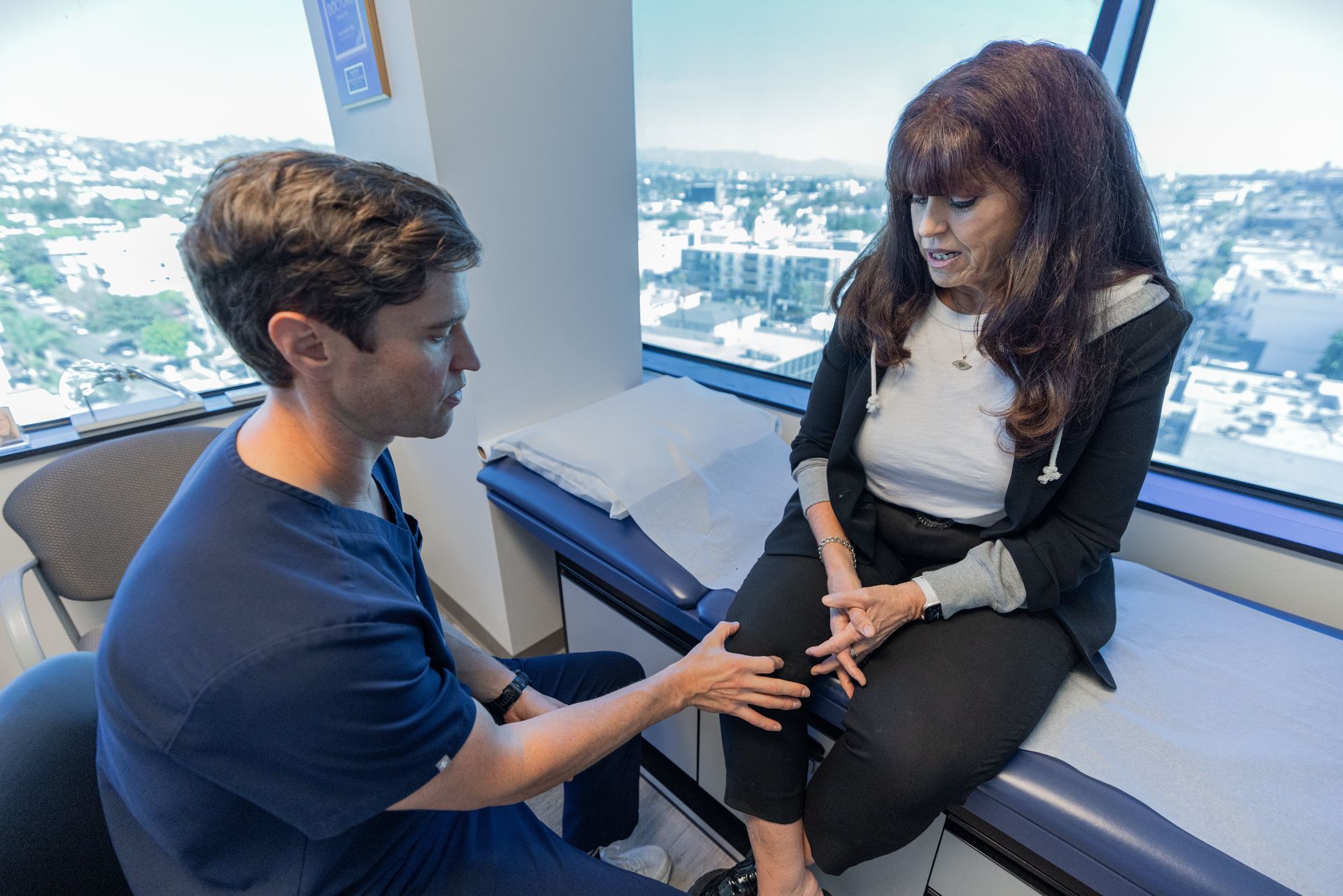
Dr. Cooper examines your knee, reviews your history, and looks at weight-bearing X-rays to see how much joint space is left. You'll hear plainly whether surgery is the right call yet.
Step 02
Trying everything else first
If there's still cartilage to protect, we discuss injections, bracing, activity changes, or regenerative options like PRP. Replacement is recommended when those approaches have run their course.
Step 03
Surgical planning and clearance
Measurements from your imaging guide implant sizing and alignment. You'll complete medical clearance, review your medications, and get written instructions for the days before surgery.
Step 04
Surgery day
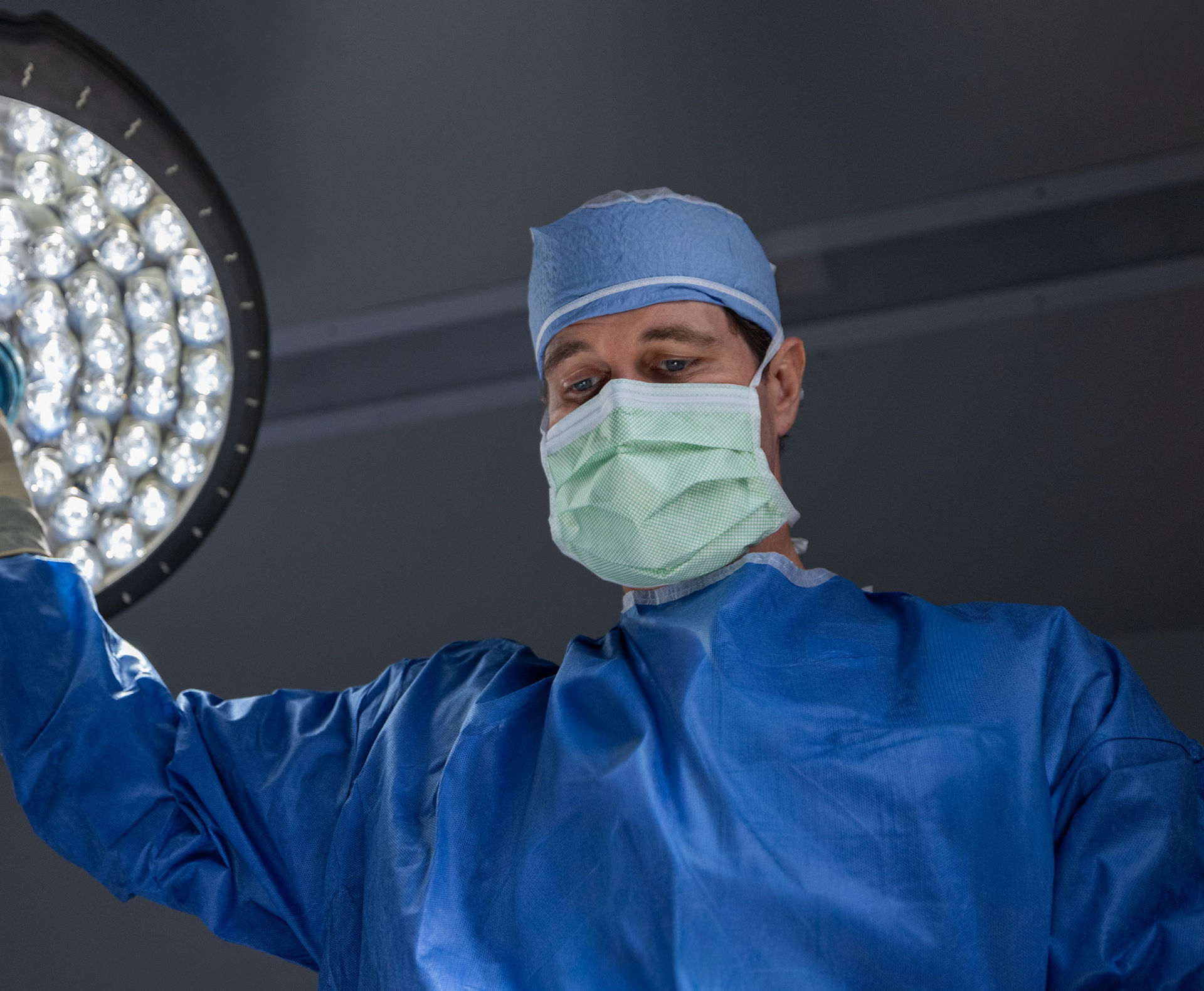
The procedure is usually done under spinal anesthesia with sedation, so you're comfortable and wake up more easily. Most total knee replacements take one to two hours in the operating room.
Step 05
Early movement
Physical therapy starts the same day or the morning after. Standing and short walks with a walker come first, then bending the knee. Many patients go home the day of surgery or the next day.
Step 06
Rehab and follow-up
Outpatient therapy builds range of motion and quad strength over several weeks. Dr. Cooper checks your progress at set intervals and adjusts the plan based on how the knee is responding.
Why patients choose this practice
One surgeon, start
to finish
Dr. Joe Cooper handles joint replacement of the hip, knee, and shoulder, along with sports injury repair and regenerative treatments. That focus matters for a knee replacement, because the same hands that plan your alignment perform the surgery and follow your recovery.
Our office at 8436 W 3rd St. in Los Angeles runs on scheduled appointments Monday through Friday, 9am to 4pm. You get real time in the room to ask questions, look at your own X-rays, and understand what the implant will and won't do for you before you commit to anything.
If your knee isn't ready for replacement, we say so and treat it another way.
A minimally invasive approach where your anatomy allows, to support earlier walking.
Written milestones, therapy coordination, and direct follow-up with Dr. Cooper.
How we approach knee replacement
The standards behind
every knee we treat
Surgery when it earns its place
A knee replacement is recommended when pain limits your daily life and imaging shows the cartilage is gone. Not before.
Alignment over speed
How the implant sits determines how the knee feels years later. Positioning is measured, checked, and confirmed during the procedure.
Move early, move often
Standing and walking within hours of surgery lowers stiffness and helps circulation. Therapy is part of the plan from day one.
Common Questions
Common questions about total knee replacement
Most patients walk with a walker or cane within the first day or two and switch to a cane around the two-to-four week mark. Driving usually returns between three and six weeks if the surgery was on the right knee, sooner for the left. Desk work is often possible at four to six weeks. Swelling and the last bit of strength keep improving for six to twelve months, which surprises people — the knee keeps getting better long after you're back to normal activity.
The total depends on your insurance plan, the surgical facility, anesthesia, and your therapy needs afterward. Most commercial plans and Medicare cover knee replacement when imaging and documented treatment history support it. Our office verifies your benefits and gives you a written estimate of your out-of-pocket portion before surgery is scheduled. Call 424-800-3627 and we'll start that review.
Published joint registry data shows the majority of modern knee implants are still functioning well at 15 to 20 years. Your weight, activity level, bone quality, and how the implant is aligned all affect that range. Dr. Cooper will discuss what's realistic for your age and activity goals during your consultation.
Age alone doesn't decide it. What matters is how much the pain limits you, what your X-rays show, and whether your overall health supports surgery and recovery. Younger patients are sometimes advised to wait or consider other options because of implant lifespan. Older patients in good health do well with replacement routinely. The right answer comes from an exam and imaging, not a birth year.
Still Have Questions?
We're Here to Help
Our team is happy to answer any questions you have about treatments, appointments, and what to expect.
Contact UsNo referral required
Next step
Find out whether your knee is ready for replacement
Bring your questions and any recent imaging. Dr. Cooper will examine the knee, review your X-rays with you, and lay out your options — surgical or not — in plain terms. Our office is at 8436 W 3rd St., Los Angeles, open Monday through Friday, 9am to 4pm.