Regenerative Medicine
Stem Cell Therapy in Los Angeles
Joint pain that limits your walking, lifting, or sleep doesn't always call for surgery right away. Dr. Joe Cooper offers stem cell therapy as a non-surgical option for knee, hip, and shoulder pain, using your own cells to support the body's repair process.
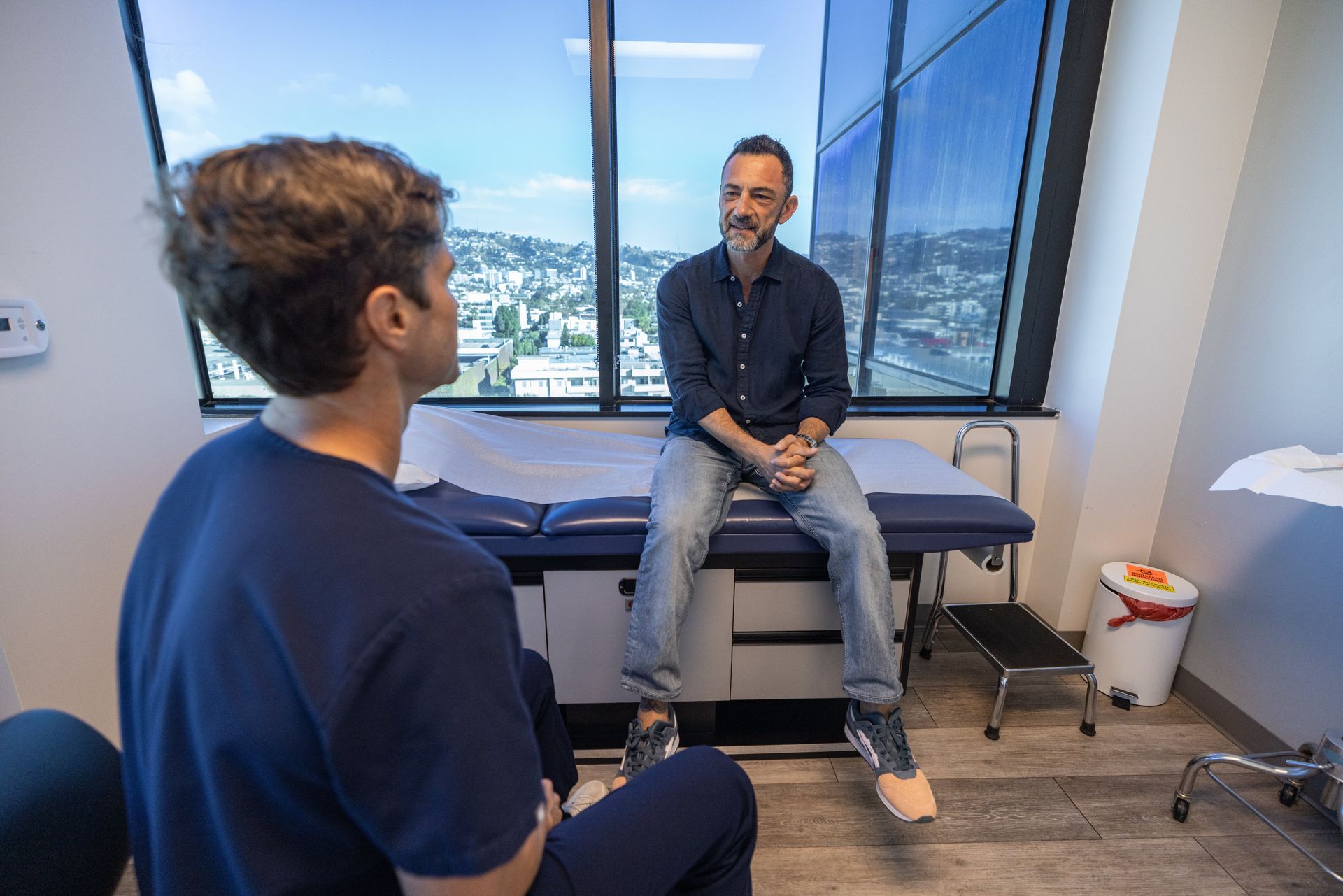
What It Is
A non-surgical option for worn,
painful joints
Stem cell therapy uses cells taken from your own body, most often from bone marrow in the pelvis, and concentrates them into an injection placed directly into the damaged joint or tendon. These cells release signals that can support healing in tissue that has limited blood supply and heals slowly on its own. Patients in Los Angeles often ask about it for knee arthritis, hip pain, rotator cuff irritation, and tendon injuries that have not responded to rest, physical therapy, or cortisone. Because the cells come from you, there is no donor matching and no risk of rejection. It is an outpatient procedure done in the office, usually in under two hours, and you walk out the same day. Stem cell therapy is not a cure for advanced arthritis and it does not rebuild a joint that has lost most of its cartilage. Dr. Cooper will tell you honestly whether your imaging and symptoms suggest you are a reasonable candidate, or whether joint replacement or another treatment would serve you better.
What to Expect
Your stem cell treatment,
step by step
Step 01
Consultation and Imaging Review
Dr. Cooper examines the joint, reviews your X-rays or MRI, and asks what the pain keeps you from doing. If your cartilage loss is too advanced, he will say so and discuss other options.
Step 02
Candidacy Discussion
You go over what stem cell therapy can reasonably do for your specific joint, what it cannot do, the cost, and how it compares to PRP, cortisone, or surgery. No pressure to decide that day.
Step 03
Cell Collection
On treatment day, bone marrow is drawn from the back of your pelvis using local numbing medicine. Most patients describe brief pressure rather than sharp pain.
Step 04
Concentration in the Office
Your sample is spun in a centrifuge to concentrate the cell-rich portion. This happens in the office while you rest, so nothing is shipped out or stored elsewhere.
Step 05
Guided Injection
The concentrate is injected into the joint or tendon using ultrasound or fluoroscopy so placement is accurate. You go home the same day, usually walking without assistance.
Step 06
Recovery and Follow-Up
You rest the joint for a few days, then gradually return to activity with a guided plan. Dr. Cooper checks your progress at set intervals over the following months.
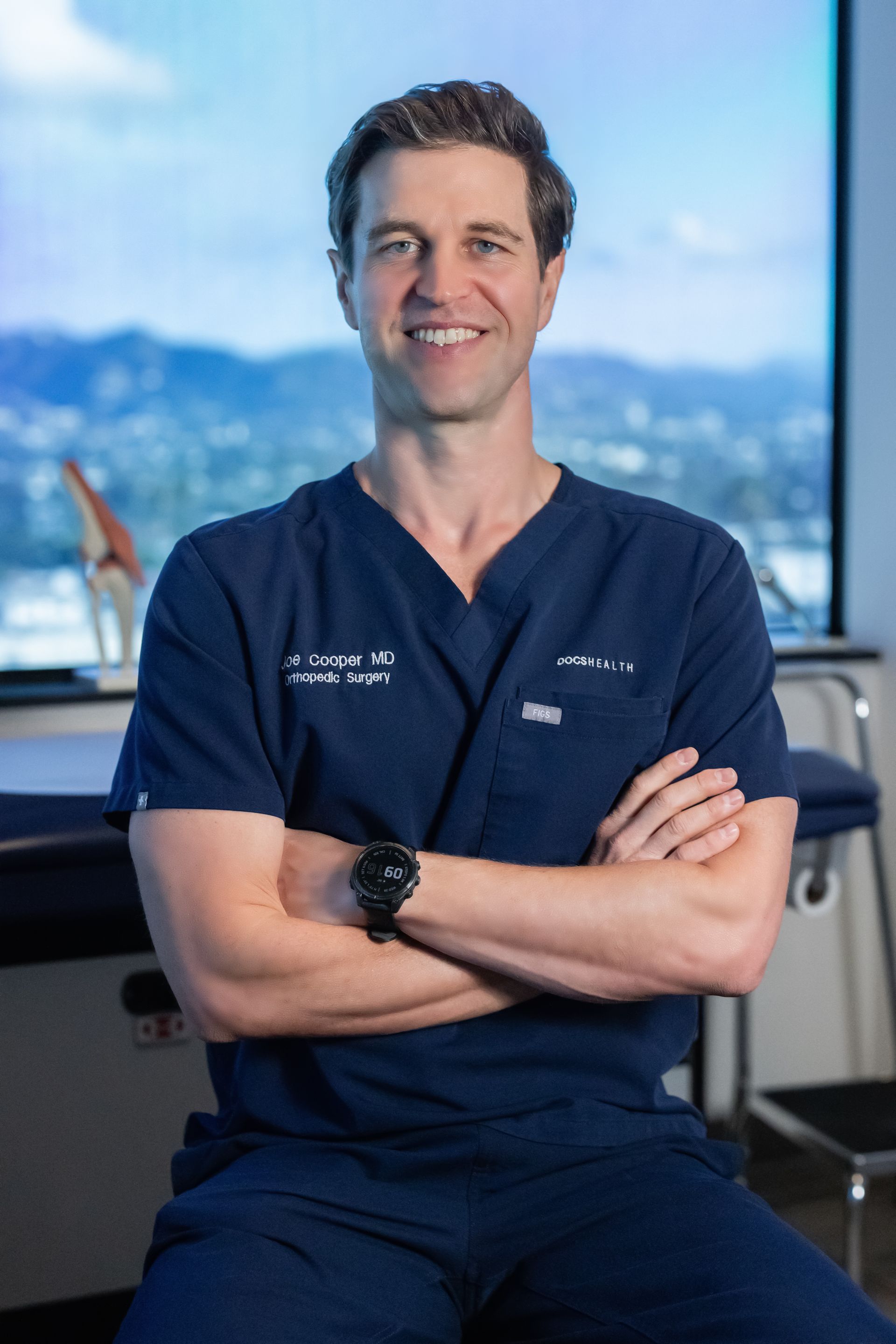
Why This Practice
Treated by a surgeon who also
performs joint replacement
Dr. Joe Cooper performs total hip, knee, and shoulder replacement as well as ACL and meniscus repair. That matters when you are considering regenerative treatment, because the same surgeon evaluating your joint also knows exactly what surgery would involve if you needed it later. You get a straight answer about where you sit on that path.
Stem cell therapy is offered here as one option among several, not as a standalone product. Some patients do better with PRP. Some need arthroscopy. Some are ready for a replacement and would only be delaying relief by injecting a joint that has run out of cartilage. The consultation exists to sort that out before you spend money on treatment.
The office is on W 3rd St. in Los Angeles, with appointments Monday through Friday, 9am to 4pm.
Your joint is assessed by the same surgeon who performs replacement and sports-injury repair.
Collection, processing, and injection all happen in one office visit. No hospital stay.
If imaging shows you are past the point where injections help, you will hear that directly.
Who It May Help
Conditions we commonly
evaluate for stem cell therapy
Knee Osteoarthritis
Early to moderate cartilage wear causing stiffness, swelling, and pain on stairs or after sitting. A common reason Los Angeles patients ask about stem cell treatment for knees.
Hip and Shoulder Pain
Joint pain from wear or repetitive strain that limits reaching overhead, sleeping on one side, or walking distances.
Tendon and Rotator Cuff Injuries
Partial tears and chronic tendon irritation that have not settled with rest, physical therapy, or anti-inflammatory treatment.
Common Questions
Common Questions About Stem Cell Therapy
Cost depends on the joint treated and how many sites are injected. Most insurance plans do not cover stem cell injections, so this is usually an out-of-pocket treatment. You will be given a clear written price before you schedule anything. Call (424) 800-3627 if you want a range before booking a consultation.
The bone marrow collection is done with local anesthetic, and most patients describe pressure rather than sharp pain. The injection itself takes a few minutes. Soreness in the treated joint for several days afterward is normal and usually eases with ice and rest.
Changes are gradual, not immediate. Some patients notice less pain within four to six weeks, and improvement can continue over three to six months as the tissue responds. Results vary, and some patients see little change. Dr. Cooper will discuss what is realistic for your joint before treatment.
No. If cartilage loss is advanced and bone is rubbing on bone, an injection will not rebuild the joint. Stem cell therapy is better suited to earlier wear and soft tissue injury. Part of the consultation is determining which category you fall into so you are not delaying a treatment that would actually help.
Still Have Questions?
We're Here to Help
Our team is happy to answer any questions you have about treatments, appointments, and what to expect.
Contact UsNo referral required
Next Step
Find out if stem cell therapy fits your joint
Bring your recent X-rays or MRI if you have them. Dr. Cooper will review your imaging, examine the joint, and give you a direct answer about whether regenerative treatment, PRP, or surgery makes more sense for you.