Shoulder Care
Shoulder Specialist in Los Angeles
Reaching for a shelf hurts. Sleeping on that side wakes you up. Shoulder pain rarely fixes itself, and guessing at the cause wastes months. Dr. Joe Cooper treats rotator cuff tears, dislocations, labral injuries, impingement and arthritis for patients across Los Angeles — with surgery only when it is the right answer for you.
What We Treat
The shoulder problems we see
every week
The shoulder moves more than any other joint in your body, so there are more ways for it to go wrong. A rotator cuff tear often starts as a dull ache and turns into weakness lifting your arm overhead. A dislocation can leave the joint loose and prone to slipping again. Labral tears are common in throwers, swimmers and anyone who braced a fall with an outstretched arm. Arthritis wears the cartilage down over years and stiffens the joint.
Frozen shoulder, biceps tendon problems, bursitis and AC joint injuries round out the list. Each one feels similar from the outside — pain, stiffness, trouble reaching behind your back — but the treatment for each is different. That is why the first visit focuses on finding the exact cause before anyone talks about a procedure.
Most shoulder pain treatment in LA starts without surgery. Physical therapy, activity changes, targeted injections and regenerative options such as PRP resolve a good number of cases. When a tear is large, the joint keeps dislocating, or the cartilage is gone, arthroscopic repair or shoulder replacement becomes the more reliable path.
How It Works
From first visit to
full strength
Step 01
Consultation and exam
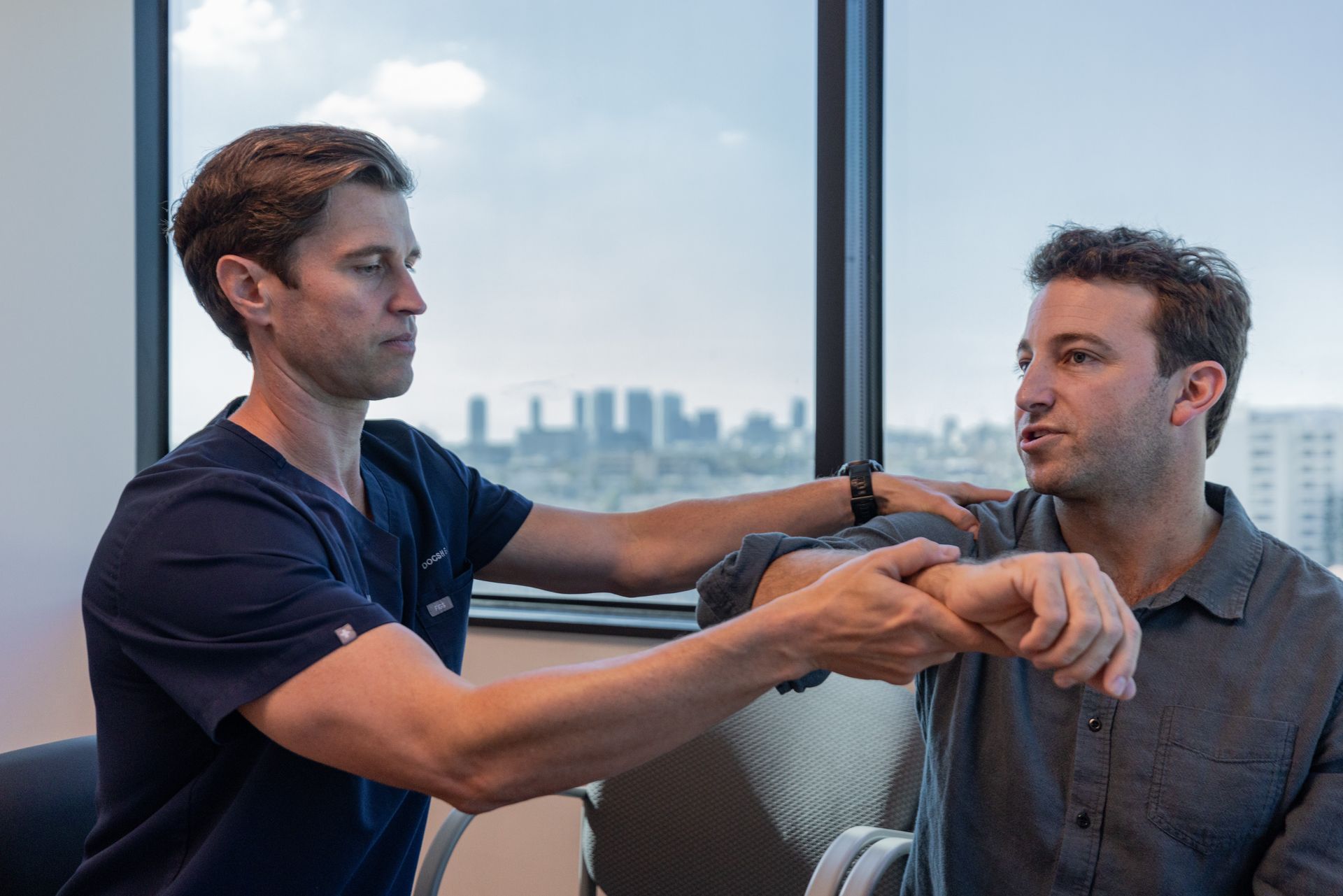
You describe when the pain started, what makes it worse, and what you can no longer do. Dr. Cooper tests your range of motion, strength and joint stability by hand. This exam alone points to the likely diagnosis in most cases.
Step 02
Imaging that confirms it
X-rays show bone spurs, arthritis and joint spacing. An MRI shows soft tissue — rotator cuff tendons, the labrum and the biceps tendon. We order only the imaging needed to answer the question, not a standard panel for everyone.
Step 03
A plan you understand
You see your own images and hear what is torn, worn or inflamed in plain terms. We review the non-surgical options first, what each one realistically does, and what happens if you wait.
Step 04
Non-surgical treatment
Structured physical therapy, cortisone or PRP injections, and changes to how you train or work. Many rotator cuff strains, bursitis cases and early arthritis improve at this stage without an operating room.
Step 05
Surgery when it is warranted
Arthroscopic rotator cuff repair, labral repair and stabilization are done through small incisions with a camera. Advanced arthritis may call for total or reverse shoulder replacement. Most shoulder procedures go home the same day.
Step 06
Recovery and follow-up
A sling for the early weeks, then guided therapy that restores motion before strength. We track your progress at set intervals and adjust the plan so you return to work, lifting or sport at a pace your repair can handle.
Why Patients Choose Us
A surgeon-led approach to
shoulder treatment
Dr. Joe Cooper is an orthopedic surgeon in Los Angeles whose work centers on joint replacement and sports injury repair — hip, knee and shoulder. You see him at the consultation, he reads your imaging with you, and he performs your procedure.
That continuity matters with shoulders. The difference between a tear that needs repair and one that responds to therapy is a judgment call, and it is better made by the person who examined you than by a chart passed between providers. If your shoulder can be managed without surgery, you will hear that first.
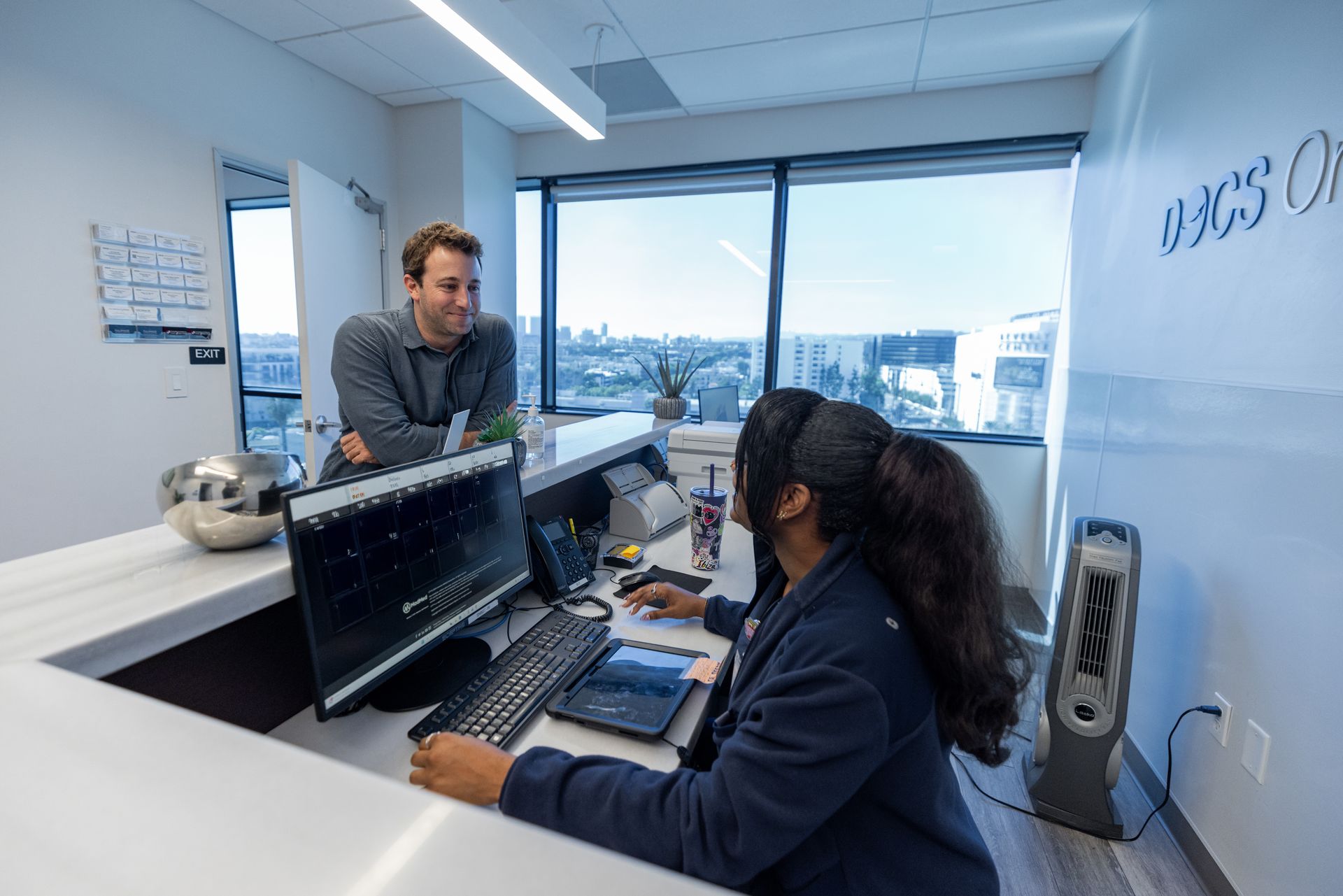
The practice also offers regenerative options including PRP and stem cell treatment for patients whose pain sits between conservative care and the operating room. Appointments run Monday through Friday, 9am to 4pm, at our 8436 W 3rd St. office near the Beverly Grove area.
The same physician evaluates, operates and follows your recovery.
Therapy, injections and regenerative care are considered first when appropriate.
Small-incision repair for cuff and labral tears, with same-day discharge in most cases.
How We Practice
What guides every
shoulder case
Diagnose before treating
Shoulder pain has many sources that feel identical. We identify the structure causing it before recommending anything.
Least invasive option that works
If therapy or an injection can get you there, that is where we start. Surgery is reserved for problems it actually solves.
Honest timelines
Rotator cuff repair takes months, not weeks. You will know the real recovery curve before you commit to anything.
Common Questions
Common questions about shoulder care
Book an appointment if pain has lasted more than three or four weeks, if you cannot lift your arm overhead, if the shoulder has slipped out of joint, or if pain consistently wakes you at night. Sudden weakness after a fall or a pop during activity should be looked at sooner.
No. Many partial tears and age-related tears improve with physical therapy and injections, especially in people who are not doing heavy overhead work. Full-thickness tears in active patients, and tears that leave the arm genuinely weak, tend to do better with arthroscopic repair. We review your imaging and your daily demands together before deciding.
Expect a sling for roughly four to six weeks, gentle guided motion after that, and strengthening from around the three-month mark. Desk work often resumes within one to two weeks. Full return to lifting, throwing or overhead labor is usually four to six months, depending on the size of the tear.
Cost depends on your insurance plan, the type of replacement and where the procedure is performed, so there is no single figure. Our office verifies your coverage and gives you a written estimate of your expected out-of-pocket amount before you schedule anything. Call 424-800-3627 and we will start that check for you.
Still Have Questions?
We're Here to Help
Our team is happy to answer any questions you have about treatments, appointments, and what to expect.
Contact UsNo referral required
Next Step
Get an answer on your shoulder
Bring any imaging you already have. In one visit you will know what is causing the pain and what your options are — surgical and otherwise. Our Los Angeles office sees patients Monday through Friday, 9am to 4pm.