Regenerative Orthopedics
PRP Therapy in Los Angeles
Knee pain that flares every time you take the stairs. A shoulder that aches through the night. An old tendon injury that never fully settled. PRP therapy uses a concentrated part of your own blood, injected into the painful joint or tendon, to support your body's own repair process. Dr. Joe Cooper offers PRP injections in Los Angeles for patients who want to try a non-surgical option first.
What PRP Is
Your own platelets, placed where
the pain starts
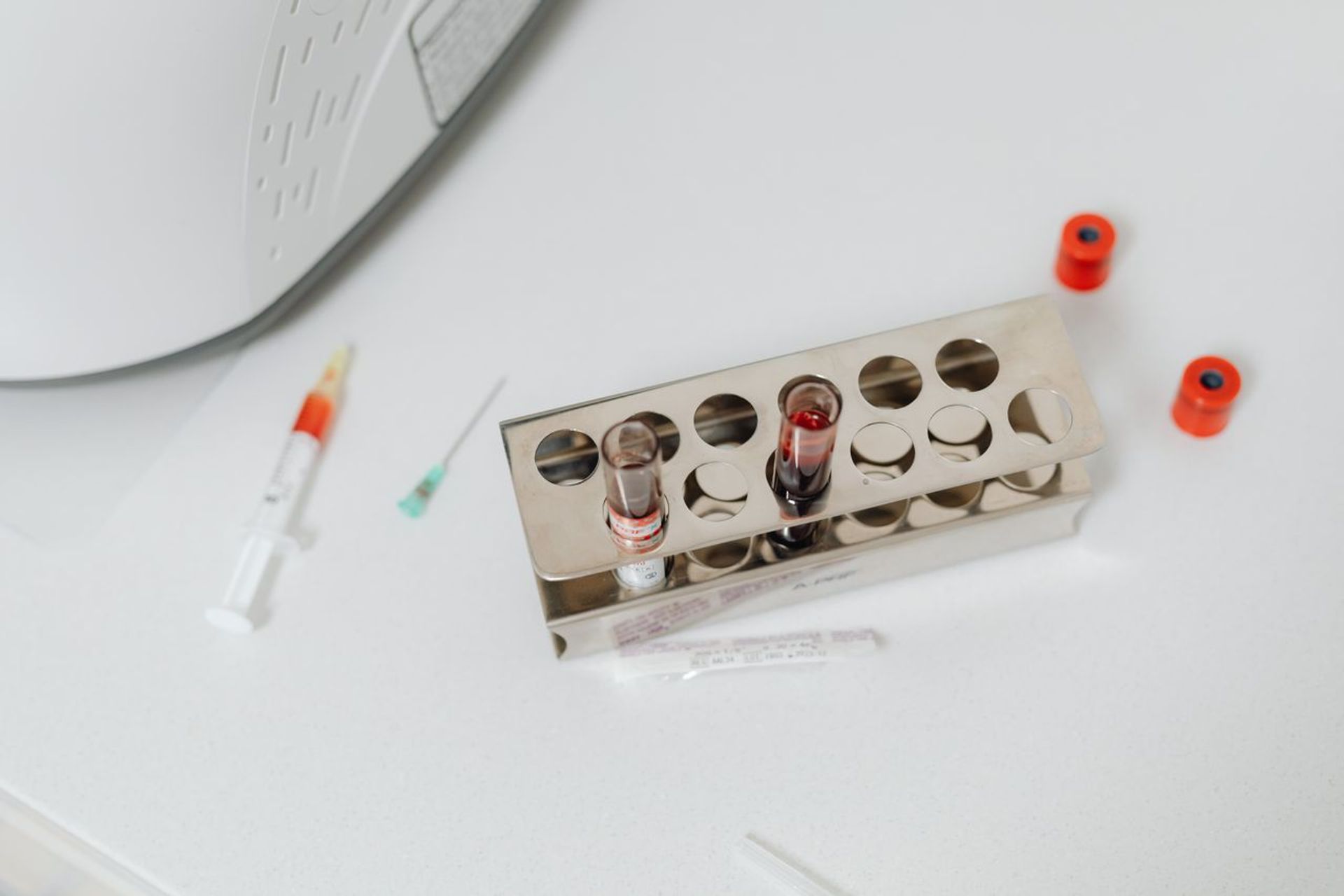
PRP stands for platelet-rich plasma. We draw a small amount of your blood, spin it in a centrifuge to separate out the platelets, then inject that concentrated portion into the joint, tendon, or ligament that is bothering you. Platelets carry growth factors, the signals your body already uses to repair tissue after an injury. Concentrating them and delivering them directly to the problem area is the idea behind the treatment.
Patients in Los Angeles most often ask about PRP for knee osteoarthritis, tennis elbow, rotator cuff irritation, Achilles and patellar tendon problems, and hip pain that has not settled with rest or physical therapy. It is also used alongside sports-injury care when a partial tear is healing slowly.
PRP is not a replacement for joint replacement surgery, and it will not rebuild a joint that has worn down to bone on bone. What it may do is reduce pain and improve function enough that you can move more comfortably and delay or avoid a bigger procedure. Dr. Cooper will tell you plainly whether your imaging and exam suggest you are a reasonable candidate.
What to Expect
Your PRP visit,
step by step
Step 01
Consultation and exam
You tell us where it hurts, what makes it worse, and what you have already tried. Dr. Cooper examines the joint and reviews any X-rays or MRI images you bring.
Step 02
Deciding if PRP fits
Not every joint responds to PRP. We go over what your imaging shows, what the treatment can realistically do for your condition, and what the alternatives are, including doing nothing for now.
Step 03
Blood draw
On treatment day we draw blood from your arm, similar to a routine lab test. The amount depends on how many sites are being treated.
Step 04
Preparing the platelets
Your sample goes into a centrifuge in the office. Spinning separates the platelet-rich layer from the rest of the blood, and that layer is drawn up for your injection.
Step 05
Guided injection
The skin is numbed, then the PRP is placed into the joint or tendon. Imaging guidance is used where it helps accuracy, particularly in the hip, knee, and shoulder.
Step 06
Recovery and follow-up
You go home the same day. Expect some soreness for a few days, then a gradual return to activity on a schedule we give you. We check in to see how the joint is responding and discuss whether a second injection makes sense.
Why This Practice
Treated by a surgeon who also
does the surgery
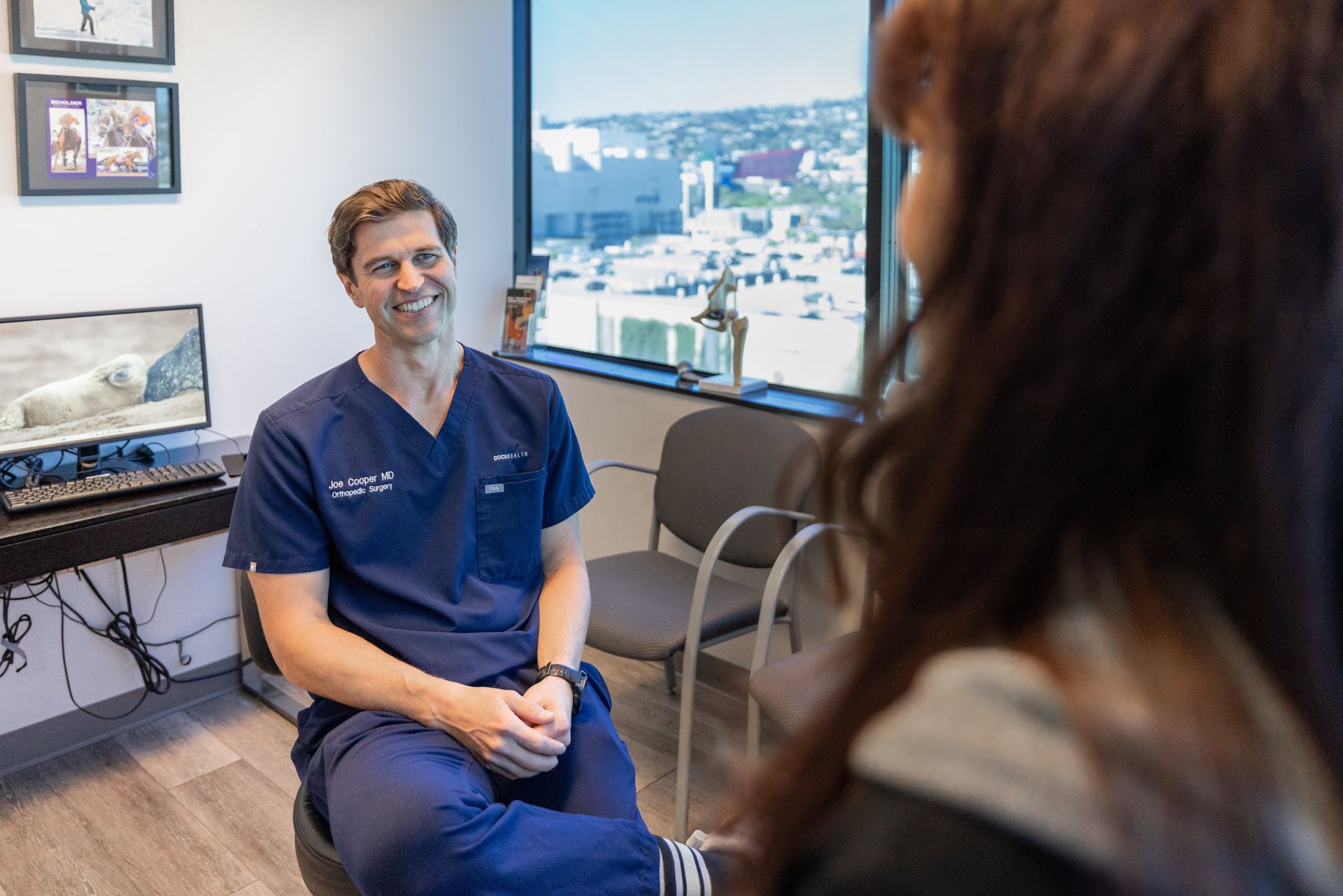
Dr. Joe Cooper performs hip, knee, and shoulder replacement and repairs ACL and meniscus injuries. That matters when you are considering PRP, because the person recommending an injection is the same person who can tell you honestly when an injection is not going to be enough.
Some patients come in hoping to avoid surgery and leave with a PRP plan. Others find out their joint damage has gone past what regenerative treatment can help, and we talk about surgical options instead. Either way, you get a straight answer rather than a sales pitch for one treatment.
The office is on W 3rd St in Los Angeles, open Monday through Friday. Appointments are scheduled, so you are seen at a set time rather than waiting in a queue.
Your imaging and exam are reviewed by an orthopedic surgeon, not a technician.
Blood draw, preparation, and injection all happen in one visit.
If PRP is unlikely to help your joint, we say so and explain what will.
How We Approach It
What guides your
treatment plan
Diagnosis before treatment
Knee pain has many causes. We identify what is actually generating your pain before injecting anything into the joint.
Realistic expectations
Results vary from person to person. We explain what the research supports for your specific condition and what it does not.
PRP as part of a plan
Injections work best alongside strengthening, activity changes, and weight management where relevant. We give you the whole plan, not just the shot.
Common Questions
Common questions about PRP injections
The blood draw feels like a standard lab test. For the injection itself, the skin is numbed first. Most patients describe pressure more than sharp pain during the injection, followed by soreness in the joint for two to five days. That soreness is expected and usually manageable with ice and rest.
PRP is not a quick pain blocker like a cortisone shot. Because it works with your body's repair process, improvement tends to build over weeks. Many patients notice a change somewhere between four and eight weeks, and we reassess at your follow-up. Some conditions respond better to a series of two or three injections spaced a few weeks apart.
Most insurance plans consider PRP elective and do not cover it, so it is typically paid out of pocket. Cost depends on the joint being treated and how many injections are planned. We give you the exact figure at your consultation, before you schedule treatment.
PRP is generally not recommended for people with active infections, certain blood or platelet disorders, or advanced bone-on-bone arthritis where the cartilage is largely gone. Some blood thinners and anti-inflammatory medications may need to be paused beforehand. Bring your full medication list to your visit so we can review it.
Still Have Questions?
We're Here to Help
Our team is happy to answer any questions you have about treatments, appointments, and what to expect.
Contact UsNo referral required
Next Step
Find out if PRP is right for your joint
Bring your recent X-rays or MRI if you have them. Dr. Cooper will examine the joint, review your imaging, and tell you whether PRP is a reasonable option or whether another treatment would serve you better.