Knee Care in Los Angeles
Meniscus Tear Treatment
A knee that catches, locks, or swells after a twist usually means the meniscus is torn. Dr. Joe Cooper treats meniscus tears in Los Angeles with a plan built around your knee — from bracing and rehab to arthroscopic repair when the tear calls for it.
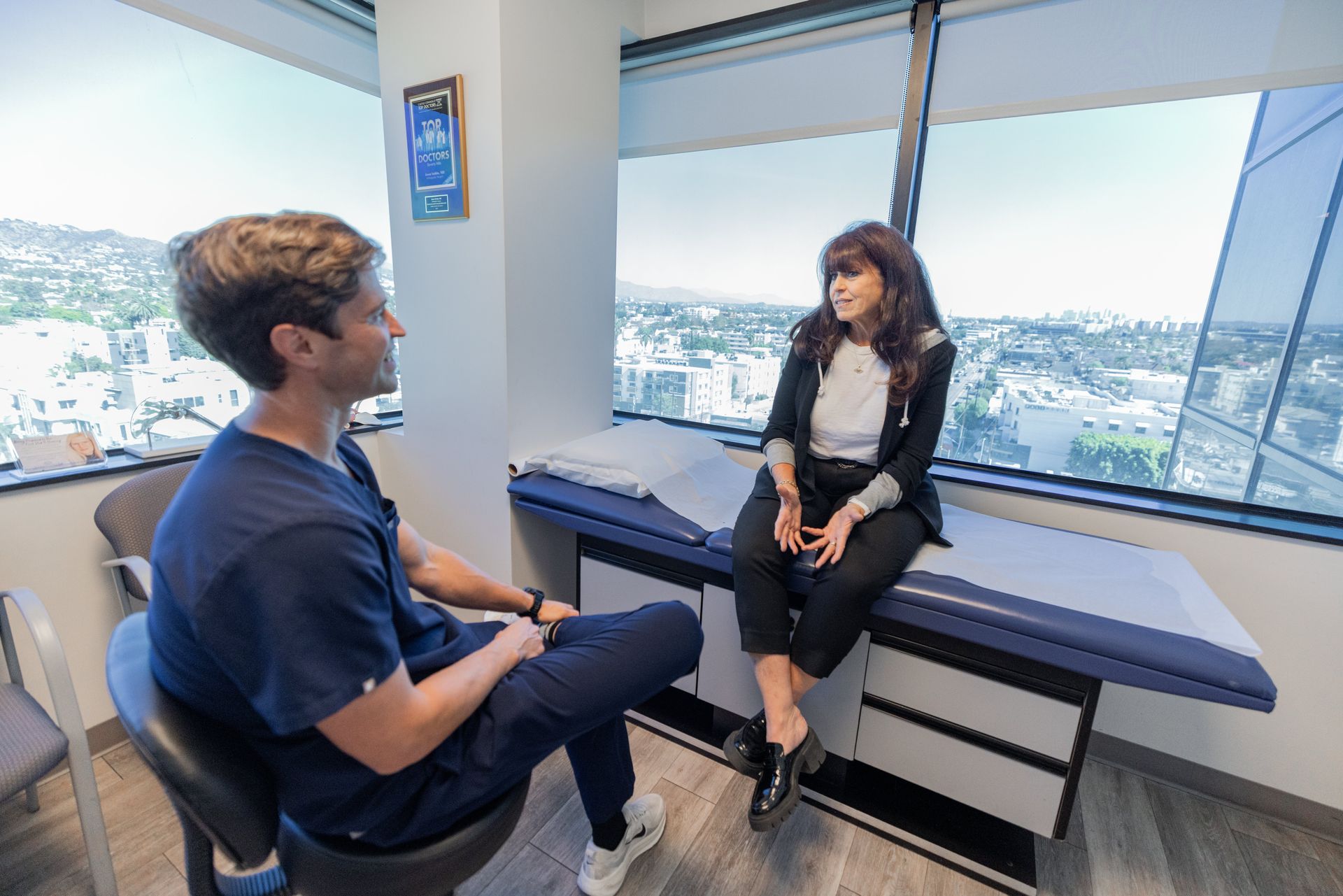
What a meniscus tear feels like
When your knee
won't cooperate
The meniscus is a C-shaped pad of cartilage that sits between your thigh bone and shin bone. You have two in each knee. They cushion the joint and keep it stable when you pivot, squat, or land. A tear happens two ways: a sudden twist during sport, or slow wear that thins the cartilage over the years. Younger patients often feel a pop. Older patients often just notice their knee aching on stairs and swelling by the end of the day. Common signs include pain along the inside or outside of the joint, stiffness after sitting, clicking, a sense that the knee may give out, and in some cases a knee that locks and will not straighten fully. A locked knee should be seen quickly — that usually means a fragment of cartilage is caught in the joint. Not every tear needs surgery. Some settle with rest, activity changes, and guided physical therapy. Others, particularly bucket-handle tears and tears in the outer zone with good blood supply, do better when they are repaired. Dr. Cooper examines the knee, reviews your imaging, and tells you plainly which group you fall into and why.
How care works
From first visit to
back on your feet
Step 01
Knee exam and history
Dr. Cooper asks how the injury happened, then tests the joint line, range of motion, and stability. Simple hands-on tests can point to a meniscus tear before any scan is ordered.
Step 02
Imaging that answers a question
X-rays show alignment and any arthritis. An MRI shows the meniscus itself — where the tear sits, its shape, and whether the cartilage around it is healthy enough to repair.
Step 03
Your treatment options, explained
You hear what happens with therapy alone, what arthroscopic surgery involves, and how each choice affects your timeline. Cost and insurance coverage are reviewed before anything is scheduled.
Step 04
Non-surgical care first when it fits
For many degenerative tears, a course of physical therapy, activity changes, bracing, or an injection settles symptoms. Regenerative options such as PRP may be discussed for suitable knees.
Step 05
Arthroscopic repair or trimming
Through two small incisions, a camera and fine instruments either stitch the torn edges back together or smooth away the damaged fragment. Most patients go home the same day.
Step 06
Rehab and return to activity
Physical therapy rebuilds quad strength and motion on a schedule matched to what was done inside the knee. Dr. Cooper checks progress at set intervals and clears you stage by stage.

Why patients choose this practice
A surgeon who treats
knees every week
Meniscus work sits alongside ACL reconstruction and joint replacement in Dr. Cooper's daily practice, so torn knees are familiar ground here. That matters because the decision between repairing a meniscus and trimming it is a judgment call made partly in the operating room, based on the tissue in front of you.
The practice runs on scheduled appointments, Monday through Friday, from the West Third Street office in Los Angeles. You are seen by Dr. Cooper at your consultation and at your follow-ups — not handed between providers. If therapy is the right starting point, he will say so. If surgery gives you the better long-term knee, he will explain exactly why and what recovery asks of you.
Keeping healthy meniscus tissue protects the knee cartilage long term, so repair is considered first whenever the tear pattern and blood supply allow.
Small incisions, a camera-guided procedure, and same-day discharge for most patients.
The same person who examines your knee performs the procedure and follows your recovery.
How we approach knee care
Straight answers about
your knee
Surgery only when it helps
Research on degenerative meniscus tears has shifted. Many knees do as well with structured therapy as with a trim. You will hear that honestly rather than being routed straight to an operating room.
Plain language, no rushing
Your MRI is pulled up on screen and walked through with you. Ask anything twice if you need to. Decisions about your knee should be ones you understand.
Recovery planned before surgery
You know the brace, weight-bearing rules, time off work, and driving timeline before the date is booked — not after you wake up.
Common Questions
Common questions about meniscus tears
Some can. Tears in the outer third of the meniscus have blood supply and a real chance of healing with rest, bracing, and physical therapy. Tears in the inner portion have little blood flow and usually do not knit back together, though symptoms can still calm down enough to stay active without surgery. Which category yours falls into is something the exam and MRI answer.
A repair stitches the torn edges together so the cartilage can heal, which preserves the cushion in your knee but asks for a longer, more protected recovery. A partial meniscectomy trims away the damaged piece, which usually allows a faster return to activity but removes tissue permanently. Dr. Cooper aims to repair when the tear pattern and tissue quality support it.
After a trim, many patients walk without crutches within days and return to desk work in about one to two weeks, with sport around six weeks. After a repair, weight-bearing and knee bending are limited for roughly four to six weeks while the stitched cartilage heals, and a return to cutting sports typically takes three to four months. Your own timeline depends on the tear and your job or sport.
Cost depends on whether care stays non-surgical, what imaging is needed, the surgical facility used, and your insurance plan. Our office reviews coverage and gives you an estimate before anything is scheduled. Call (424) 800-3627 and we will walk through the specifics of your plan.
Still Have Questions?
We're Here to Help
Our team is happy to answer any questions you have about treatments, appointments, and what to expect.
Contact UsNo referral required
Next step
Get your knee looked at
If your knee is locking, swelling, or giving way, have it examined before you work around it for another month. Appointments are available Monday through Friday at our Los Angeles office.